
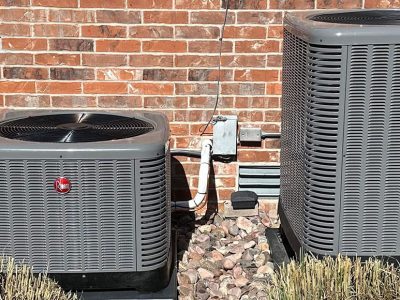
Yes, it is generally fine to leave your AC on 24 hours a day if the system is properly maintained and is capable of reaching the temperature you’ve set on the thermostat.
Many homeowners mistakenly believe that an air conditioner should cool the house quickly, shut off for long periods, and then restart only occasionally. In reality, that’s not how central air conditioning systems are designed to operate.
During periods of extreme heat, your AC may run almost continuously to maintain indoor comfort. Long cooling cycles are often far more efficient than frequent starts and stops.
The important question isn’t whether the unit is running continuously.
The important question is whether it is cooling your home effectively.
If your home stays comfortable and the indoor temperature remains consistent, your system is likely functioning exactly as intended.
How Air Conditioners Are Designed to Operate
One of the biggest misconceptions homeowners have is that an air conditioner works like a refrigerator—it turns on briefly, cools everything quickly, and then shuts off.
An HVAC system actually works very differently.
Your air conditioner doesn’t produce cold air. Instead, it continuously removes heat from inside your home and transfers that heat outdoors through the refrigeration cycle.
Every minute your system runs, it is pulling heat out of your indoor air while simultaneously removing moisture. This process continues until the thermostat senses that the desired temperature has been reached.
When outdoor temperatures rise dramatically, heat enters your home faster through the roof, attic, windows, walls, doors, and even tiny air leaks around the structure.
If heat is entering your home almost as quickly as your air conditioner can remove it, the system may need to operate nearly nonstop to maintain your thermostat setting.
That is perfectly normal.
In fact, many manufacturers actually prefer longer operating cycles because they improve efficiency, provide more even temperatures, and remove significantly more humidity.
Why Your AC Might Run All Day During Hot Weather
During exceptionally hot afternoons, homeowners often assume something must be wrong because the air conditioner hasn’t shut off in hours.
Most of the time, nothing is wrong at all.
Imagine it’s 100°F outside, the sun is beating down on your roof, your windows are absorbing radiant heat, and your family is cooking dinner while several people are moving around inside the house.
Your home is constantly gaining heat.
Your air conditioner’s job is to remove that heat just as quickly as it enters.
Under these conditions, it’s completely normal for the system to run for most of the afternoon.
Professional HVAC technicians actually become concerned when an air conditioner shuts off too quickly during extreme heat because short cycles can indicate an oversized system. Oversized equipment cools the air rapidly but doesn’t run long enough to remove humidity, leaving the house feeling cool yet damp and uncomfortable.
Longer cycles usually provide better comfort.
Is It Better to Leave the AC Running or Turn It Off?
This is another question that generates plenty of conflicting advice online.
Some people recommend turning the air conditioner completely off whenever you leave home. Others insist it should stay on all day.
The truth lies somewhere in between.
When you completely shut the system off, your home’s interior begins storing heat. The walls, floors, furniture, ceilings, cabinets, and even your belongings gradually warm up throughout the day.
By the time you return home, your air conditioner isn’t just cooling the air.
It must also remove all the heat that has accumulated inside your home’s structure.
That recovery process often takes several hours.
Rather than turning the system off entirely, HVAC professionals usually recommend increasing the thermostat setting by about five to eight degrees while you’re away. This allows your home to stay reasonably cool without forcing the air conditioner to work excessively when you return.
Smart thermostats make this process even easier by automatically adjusting temperatures based on your schedule.
Does Running Your AC 24/7 Increase Your Electric Bill?
Running any electrical appliance continuously uses energy.
However, many homeowners misunderstand what actually determines their cooling costs.
Your electricity bill is influenced far more by your home’s cooling load than simply the number of hours the air conditioner operates.
A modern, high-efficiency air conditioner running steadily may consume less electricity than an older, poorly maintained system that constantly cycles on and off.
Several factors influence your monthly cooling costs.
Outdoor temperatures obviously play a major role. A week of 100-degree weather requires substantially more cooling than a week of mild temperatures.
Your thermostat setting also matters. Lowering the thermostat by just a few degrees can noticeably increase energy consumption because the system must remove additional heat to maintain the lower indoor temperature.
The condition of your home matters just as much. Poor attic insulation, aging windows, air leaks around doors, and inadequate duct sealing all force your air conditioner to work harder than necessary.
Finally, maintenance plays a significant role. Dirty coils, clogged filters, worn blower motors, and low refrigerant reduce efficiency, causing the equipment to consume more electricity while delivering less cooling.
Does Leaving Your AC On Shorten Its Lifespan?
One of the biggest myths in the HVAC industry is that running an air conditioner continuously wears it out faster.
The reality is more nuanced.
Compressors experience their greatest mechanical stress during startup.
Every time the compressor starts, it draws a large amount of electrical current known as inrush current. This sudden surge creates more stress than steady operation.
That’s one reason many modern HVAC systems are designed to operate with longer cooling cycles.
Continuous operation under normal conditions is generally easier on the equipment than constant short cycling.
What truly shortens the lifespan of an air conditioner isn’t runtime.
It’s neglect.
Systems fail prematurely because homeowners skip maintenance, ignore clogged air filters, allow refrigerant leaks to continue, or operate equipment with dirty condenser coils year after year.
A properly maintained air conditioner that runs for long periods every summer can easily provide reliable service for 15 to 20 years or more.
When Continuous Operation Is Perfectly Normal
As an HVAC technician, there are many situations where I expect an air conditioner to run almost nonstop.
Homes located in very hot climates naturally experience longer cooling cycles during peak summer afternoons.
Large west-facing windows allow tremendous amounts of solar heat to enter the home.
Older houses with limited attic insulation also require much longer cooling cycles.
High indoor humidity forces the air conditioner to spend additional time removing moisture before occupants begin feeling comfortable.
Likewise, homes with large families, frequent cooking, or multiple heat-generating appliances naturally place greater demands on the cooling system.
None of these situations necessarily indicate a mechanical problem.
When Running 24/7 Indicates Something Is Wrong
Although continuous operation can be perfectly normal, there are situations where it signals a problem that needs immediate attention.
The biggest warning sign occurs when your thermostat never reaches the desired temperature.
For example, suppose you’ve set your thermostat to 72°F.
Several hours later, the indoor temperature remains stuck at 79°F while the system continues running nonstop.
That is not normal.
After inspecting thousands of systems over the years, I’ve found that several problems commonly cause this situation.
The most common culprit is a severely clogged air filter that restricts airflow through the evaporator coil. Without adequate airflow, the system cannot transfer heat efficiently.
Dirty evaporator coils create similar problems because accumulated dust acts as insulation, preventing heat from moving into the refrigerant.
Outdoor condenser coils can become coated with dirt, pollen, grass clippings, and cottonwood seeds. When this happens, the system cannot effectively release heat outdoors, forcing the compressor to work much harder.
Low refrigerant caused by a leak is another frequent issue. Refrigerant doesn’t get “used up.” If levels are low, a leak exists somewhere in the system and should be repaired by a licensed HVAC technician.
Poor ductwork can also dramatically reduce cooling performance. If conditioned air escapes into an attic or crawlspace before reaching your living spaces, the system must operate much longer to compensate.
Finally, improperly sized equipment creates ongoing comfort problems. An undersized unit may never fully cool the home during extreme weather, while an oversized system may cycle too frequently and leave excessive humidity indoors.
What About Sleeping With the AC On All Night?
Many homeowners worry that allowing the air conditioner to run overnight somehow damages the equipment.
Fortunately, that’s not the case.
Most modern air conditioners are designed for continuous overnight operation whenever cooling demand exists.
In fact, nighttime cooling often places less strain on the system because outdoor temperatures are lower than they are during the afternoon.
If your air conditioner runs throughout the night while maintaining comfortable indoor temperatures, there is usually no cause for concern.
If, however, it runs all night without adequately cooling the house, a professional inspection is recommended.
Leaving your air conditioner on 24/7 is not something homeowners should automatically worry about. During periods of intense summer heat, long or even continuous cooling cycles are often a sign that your HVAC system is performing exactly as it was designed to. Modern air conditioners are built to remove heat steadily, maintain consistent indoor temperatures, and control humidity over extended periods.
What deserves your attention is not how long the system runs, but how well it performs. If your home stays comfortable, the thermostat reaches the desired temperature, and your energy bills remain reasonable, continuous operation is rarely a problem. On the other hand, if your AC runs around the clock without adequately cooling your home, produces weak airflow, or causes a sudden spike in electricity usage, those are clear indicators that something needs to be inspected.
Regular maintenance, clean filters, proper airflow, and a correctly sized system will do far more to protect your air conditioner than simply trying to reduce its runtime. Investing in preventive care not only improves efficiency but also extends the life of your equipment and helps you avoid costly breakdowns during the hottest days of the year.
For homeowners, the takeaway is simple: don’t judge your air conditioner by how long it runs—judge it by how effectively it keeps your home comfortable. That’s the real measure of a healthy HVAC system.

 AC Freezing Up? Here’s What Causes It