
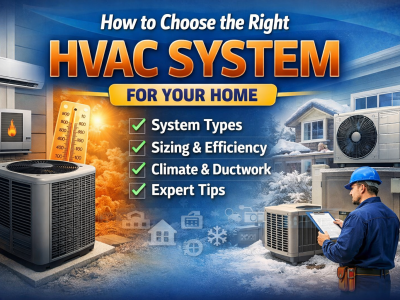
Choosing the right HVAC system for your home is one of the most important decisions you can make for long-term comfort, energy efficiency, and utility savings. The right system keeps your home cool in summer, warm in winter, and maintains healthy indoor air quality, all while minimizing energy costs.
But with so many options available, central air systems, heat pumps, ductless mini-splits, and furnaces, homeowners often feel overwhelmed when trying to choose the best solution.
Why Choosing the Right HVAC System Matters
Your HVAC system is responsible for about 40–50% of your home’s total energy usage, making it one of the biggest factors affecting comfort and monthly expenses.
Selecting the wrong system can lead to:
- Higher energy bills
- Uneven heating and cooling
- Poor indoor air quality
- Frequent breakdowns
- Short system lifespan
Choosing the correct system and size ensures optimal performance, efficiency, and comfort.
Step 1: Understand the Different Types of HVAC Systems
Before choosing a system, it’s important to understand the main options available.
1. Central Air Conditioning Systems
Central HVAC systems are the most common setup in many homes.
They include:
- A central air conditioner
- A furnace
- A duct system that distributes air throughout the home
Best For
- Medium to large homes
- Homes with existing ductwork
- Whole-home cooling and heating
Pros
- Consistent temperatures
- Quiet operation
- Works well with smart thermostats
Cons
- Requires ductwork
- Installation can be expensive
2. Heat Pumps
Heat pumps are becoming increasingly popular because they provide both heating and cooling using electricity.
They work by transferring heat instead of generating it.
Best For
- Mild to moderate climates
- Energy-efficient homes
- Homeowners looking to reduce energy bills
Pros
- Highly energy efficient
- Lower operating costs
- Provides both heating and cooling
Cons
Less efficient in extremely cold climates (unless paired with a backup system)
3. Ductless Mini-Split Systems
Mini-split systems are perfect for homes without ductwork.
They include:
- An outdoor compressor
- One or more indoor air handlers
Best For
- Older homes without ducts
- Home additions
- Room-by-room temperature control
Pros
- No ductwork required
- Extremely energy efficient
- Zoned temperature control
Cons
- Higher upfront cost per room
- Visible indoor units
4. Furnaces
Furnaces heat air and distribute it through ducts using natural gas, electricity, or oil.
Best For
- Cold climates
- Homes needing strong heating capacity
Pros
- Powerful heating
- Reliable performance
Cons
- Requires a separate air conditioning system
Step 2: Choose the Correct HVAC Size (Very Important)
One of the most common mistakes homeowners make is installing the wrong size system.
Too Small
- Struggles to cool or heat the home
- Runs constantly
- High energy bills
Too Large
- Short cycles on and off
- Poor humidity control
- Increased wear and tear
A professional contractor performs a Manual J Load Calculation, which evaluates:
- Square footage
- Insulation levels
- Window size and orientation
- Ceiling height
- Local climate
This ensures your HVAC system is perfectly sized for your home.
Step 3: Look at Energy Efficiency Ratings
Energy efficiency directly impacts your long-term operating costs.
SEER Rating (Cooling Efficiency)
SEER (Seasonal Energy Efficiency Ratio) measures how efficiently an air conditioner cools your home.
- Minimum standard: 14–15 SEER
- High efficiency: 18–21+ SEER
Higher SEER ratings mean lower energy consumption and lower electricity bills.
AFUE Rating (Furnace Efficiency)
AFUE (Annual Fuel Utilization Efficiency) measures furnace efficiency.
- Standard furnace: 80% AFUE
- High efficiency furnace: 90–98% AFUE
Higher AFUE means more heat goes into your home instead of being wasted.
Step 4: Consider Your Climate
Your location plays a huge role in determining the best HVAC system.
Hot Climates
Best options:
- Central air systems
- High-efficiency heat pumps
Cold Climates
Best options:
- Gas furnaces
- Dual-fuel heat pump systems
Mild Climates
Best option:
- Heat pumps
They provide both heating and cooling efficiently.
Step 5: Evaluate Your Home’s Ductwork
Your existing duct system may influence which HVAC system is best.
If Your Home Has Ductwork
Central air conditioning and furnaces are typically the most cost-effective options.
If Your Home Has No Ducts
Ductless mini-split systems are often the best solution.
They eliminate the need for expensive duct installation.
Step 6: Think About Indoor Air Quality
Modern HVAC systems can also improve indoor air quality.
Look for systems that support:
- Whole-home air purifiers
- Humidifiers
- Dehumidifiers
- High-efficiency air filtration (HEPA or MERV filters)
Good air quality helps reduce:
- Allergies
- Dust
- Mold
- Airborne bacteria
Step 7: Factor in Installation Costs vs. Long-Term Savings
Many homeowners focus only on the upfront price.
However, the true cost of an HVAC system includes installation, maintenance, and energy usage over time.
Typical Installation Costs
| System Type | Average Cost |
| Central Air + Furnace | $8,000 – $15,000 |
| Heat Pump | $6,000 – $12,000 |
| Ductless Mini-Split | $4,000 – $10,000 |
| Furnace Only | $3,000 – $7,000 |
A more efficient system may cost more upfront but save thousands in energy bills over its lifespan.
Step 8: Choose a Reliable HVAC Brand and Installer
Even the best HVAC equipment performs poorly if installed incorrectly.
When choosing a contractor:
✔ Check reviews and ratings
✔ Verify licenses and certifications
✔ Ask about warranties
✔ Request a detailed estimate
✔ Ensure they perform load calculations
Professional installation ensures your system runs efficiently and reliably for 15–20 years.
Common Mistakes to Avoid When Choosing an HVAC System
Homeowners often make these costly mistakes:
- Choosing the cheapest system instead of the most efficient
- Installing the wrong system size
- Ignoring the ductwork condition
- Skipping professional load calculations
- Hiring inexperienced installers
Avoiding these mistakes ensures your system delivers maximum comfort and energy efficiency.
Final Thoughts
Choosing the right HVAC system for your home doesn’t have to be overwhelming.
By considering:
- System type
- Proper sizing
- Energy efficiency ratings
- Climate
- Ductwork
- Indoor air quality
- Installation expertise
You can select a system that provides year-round comfort, lower energy bills, and long-lasting performance.
If you’re unsure which system is best, consult with a professional HVAC technician who can evaluate your home and recommend the ideal solution.

 When to Repair vs. Replace Your Air Conditioner