
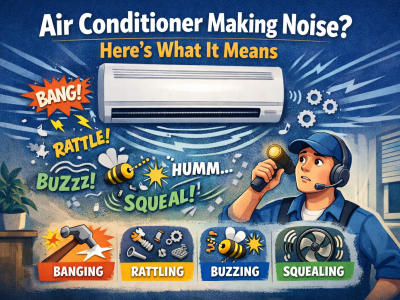
An air conditioner making noise usually signals a mechanical problem, a loose part, a refrigerant issue, or an electrical fault. Here’s the reason:
- A banging or clanking sound means a loose or broken internal part (high risk)
- Buzzing sound indicates an electrical issue or debris in the unit (medium risk)
- A hissing or whistling sound comes when there is a refrigerant leak or duct issue (high risk)
- Clicking is normal at startup, but constant clicking = an electrical fault
- Squealing or screeching happens because of a worn belt or motor bearing (medium-high risk)
- Rattling → Loose panel, debris, or failing motor (low-medium risk)
- Humming → Minor electrical issue or loose wiring (low-medium risk)
Why AC Noise Problems Shouldn’t Be Ignored
AC noise problems are often early warning signs. Catching them early can:
- Save you money — Small repairs cost far less than full replacements
- Protect your family — Some sounds (like hissing) can signal refrigerant leaks, which are a health and safety hazard
- Extend your system’s life — Addressing wear and tear early prevents cascading damage
Now let’s break down each noise in detail.
Types of AC Noises and What They Mean
1. Banging or Clanking
What it sounds like:
A loud thump, bang, or metallic clank — especially when the unit starts or shuts off.
What it likely means:
A component inside your AC, like a connecting rod, piston pin, or crankshaft, has come loose or broken. The blower fan blade may also be hitting something inside the unit.
Severity: HIGH
This is one of the most serious AC noise problems. If you hear banging, turn off your unit immediately. Running it can cause more damage to the surrounding parts.
Call a professional. This is not a DIY fix.
2. Buzzing
What it sounds like
A steady electrical hum or buzzing that’s louder than usual.
What it likely means
- Loose wiring or failing electrical components
- A dirty air filter is restricting airflow
- Debris (leaves, sticks) is stuck in the outdoor unit
- A malfunctioning contactor relay switch
- Refrigerant leak (in some cases)
Severity: MEDIUM
Buzzing from electrical components can sometimes escalate into a fire risk if ignored.
DIY or Pro? Start by checking your filter and clearing debris from the outdoor unit. If buzzing continues, call a technician.
3. Hissing or Whistling
What it sounds like
A high-pitched hiss, like air escaping a tire, sometimes inside the home, sometimes outside.
What it likely means:
- Refrigerant leak — The most common cause. Refrigerant travels through copper lines under pressure. A crack or hole causes a hissing leak.
- Leaky ductwork — Air escaping through gaps in your ductwork
- High internal pressure — A dangerous buildup in your compressor
Severity: HIGH
Safety Warning: Refrigerant leaks are a health hazard. Prolonged exposure can cause dizziness, nausea, and breathing problems. If you suspect a refrigerant leak, turn off your AC and ventilate the area.
DIY or Pro? Always call a pro. Handling refrigerant requires EPA certification.
4. Clicking
What it sounds like: A single click or two when the AC turns on or off.
What it likely means: One or two clicks at startup and shutdown are completely normal — that’s your thermostat and relay switches working properly.
Constant or repeated clicking, however, signals:
- A failing capacitor (the part that starts your compressor)
- A defective control board
- A relay switch stuck open or closed
Severity: LOW (normal) → MEDIUM-HIGH (constant clicking)
DIY or Pro? If clicking is persistent, call a technician. Capacitor issues are affordable fixes but require professional handling due to electrical risk.
5. Squealing or Screeching
What it sounds like: A loud, high-pitched metallic squeal — similar to worn brake pads on a car.
What it likely means:
- Worn fan belt (in older units with belt-driven motors)
- Dry or failing motor bearings — The motors in your blower or condenser fan need lubrication over time
Severity: MEDIUM-HIGH
If you hear squealing, your AC may still run — but the motor is being damaged with every hour it operates.
DIY or Pro? Some homeowners can lubricate fan motors themselves, but replacing belts or bearings is best left to a pro.
6. Rattling
What it sounds like: A loose, vibrating rattle — like a coin in a dryer.
What it likely means:
- Debris (twigs, leaves, small rocks) inside the outdoor condenser unit
- Loose screws or panels on the unit casing
- A failing motor with loose parts inside
- Leaves or sticks in the indoor air handler
Severity: LOW to MEDIUM
Rattling is often the most DIY-friendly noise. But if it’s coming from inside the unit rather than loose panels, get it checked.
DIY or Pro? Check for visible debris and tighten any loose screws. If rattling persists after that, call a tech.
7. Humming
What it sounds like: A low, steady hum — louder than normal operation.
What it likely means:
- Loose wiring or electrical connections
- A failing contactor or capacitor
- The motor is running but not starting properly
- Normal operation (all ACs hum lightly)
Severity: LOW to MEDIUM
A light hum is normal. A loud or new hum is worth investigating.
DIY or Pro? Check if the outdoor unit’s fan is spinning. If the unit hums but the fan isn’t spinning, the capacitor may have failed — call a pro.
When to Call an HVAC Professional Immediately
Some AC noise problems can wait a day or two. Others need urgent attention. Call a pro right away if you notice:
- Loud banging or clanking (turn the unit off first)
- Hissing combined with ice buildup on the unit
- Clicking that won’t stop
- Any burning smell alongside noise
- The AC stops cooling even though it’s running
Why is my AC making a loud noise all of a sudden?
Sudden loud noises usually mean something has come loose, broken, or become blocked. Banging, screeching, or clanking that appears suddenly should be addressed immediately by turning off the unit and calling a professional.
Is a buzzing AC dangerous?
It can be. Electrical buzzing may indicate failing wiring or components, which can pose a fire risk if ignored. Have it inspected if basic fixes (filter change, debris clearing) don’t resolve it.
Why does my AC click but not turn on?
This usually points to a failed capacitor or faulty contactor. The system is trying to start, but can’t. This is a common repair that a technician can fix quickly.
Can I still run my AC if it’s making noise?
It depends on the sound. Light humming or one-time clicking is usually fine. Banging, hissing, or constant screeching? Turn it off and call for service. Running a damaged system often makes repairs more expensive.
Why does my AC make noise when it shuts off?
A single bang or pop when the AC shuts off is often caused by the metal ductwork expanding and contracting with temperature changes. This is normal. Repeated loud banging at the shutoff is not; have it checked.
Don’t Ignore a Noisy AC
Your air conditioner making noise is never something to tune out. Whether it’s a minor rattle or a serious hiss, every sound is a clue. Understanding what you’re hearing helps you act fast, spend smart, and keep your home cool all season long.
When in doubt, get it checked out. A qualified HVAC technician can diagnose most AC noise problems in a single visit and catching issues early almost always saves money in the long run.

 What Does Eco Mean on an Air Conditioner?