
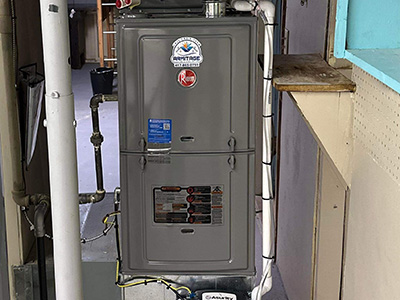
Many Springfield homeowners ask Armitage Heating & Cooling which suits them, an air handler or a furnace? When comparing an air handler vs a furnace, it helps to understand how modern HVAC systems work. Both are central components designed to distribute conditioned air throughout your home, but they generate heat differently and suit different climates.
Choosing the right one can enhance comfort, lower energy bills, and prolong the system’s lifespan.
What Is an Air Handler?
An air handler is an indoor unit that moves conditioned air through ductwork. It typically works with a heat pump or air conditioner and includes components like a blower, evaporator coil, and air filter. Air handlers don’t generate heat on their own; instead, they circulate air that has been heated or cooled elsewhere.
What Is a Furnace?
A furnace is a heating unit that creates heat by burning fuel (natural gas, propane, or oil) or using electricity. The heat exchanger warms air, which is then pushed through ducts by a blower. Furnaces are common in colder regions because they deliver strong, consistent heat.
Core Differences between Air Handler vs Furnace
Heat Source and Function
Air Handler: Distributes heated or cooled air from a heat pump.
Furnace: Produces heat directly through combustion or electric resistance.
Energy Type Used
Air Handler: Electricity only.
Furnace: Gas, oil, propane, or electricity.
Climate Suitability
Air Handler: Ideal for mild to warm climates.
Furnace: Best for cold climates with harsh winters.
Performance and Efficiency Comparison Between Air Handler & Furnace
Energy Efficiency Ratings
Air handlers paired with heat pumps are highly efficient, especially in moderate climates. Furnaces, particularly high-efficiency gas models, can reach efficiency ratings above 90%.
Operating Costs
Air handlers often have lower monthly costs in warm regions.
Furnaces may cost more to operate but provide better cold-weather performance.
Installation and Maintenance
Installation Complexity
Air handlers are generally easier to install when paired with a heat pump. Furnace installation requires gas lines, venting, and more labor.
Maintenance Needs
Both systems need regular filter changes and annual inspections. Furnace maintainance require extra safety checks due to combustion.
Pros and Cons of Each System
Air Handler Pros and Cons
Pros
- Energy efficient
- Works well with heat pumps
- Lower installation cost
Cons
- Less effective in extreme cold
- Relies fully on electricity
Furnace Pros and Cons
Pros
- Powerful heating
- Reliable in freezing temperatures
- Multiple fuel options
Cons
- Higher installation cost
- Requires fuel supply and venting
Which System Is Right for Your Home?
Best for Warm Climates
Choose an air handler with a heat pump if winters are mild and cooling is your main concern.
Best for Cold Climates
A furnace is the better option where winters are long and temperatures drop below freezing. We are famous for our furnace repair service in Springfield, MO.
When deciding between an air handler vs furnace, climate is the biggest factor. Air handlers excel in energy efficiency and mild weather, while furnaces dominate in cold climates with powerful, reliable heat. Understanding your home’s needs will help you make the smartest HVAC investment.

 HVAC Challenges Landlords Face When Renting to Drury University Students
Leave a Reply